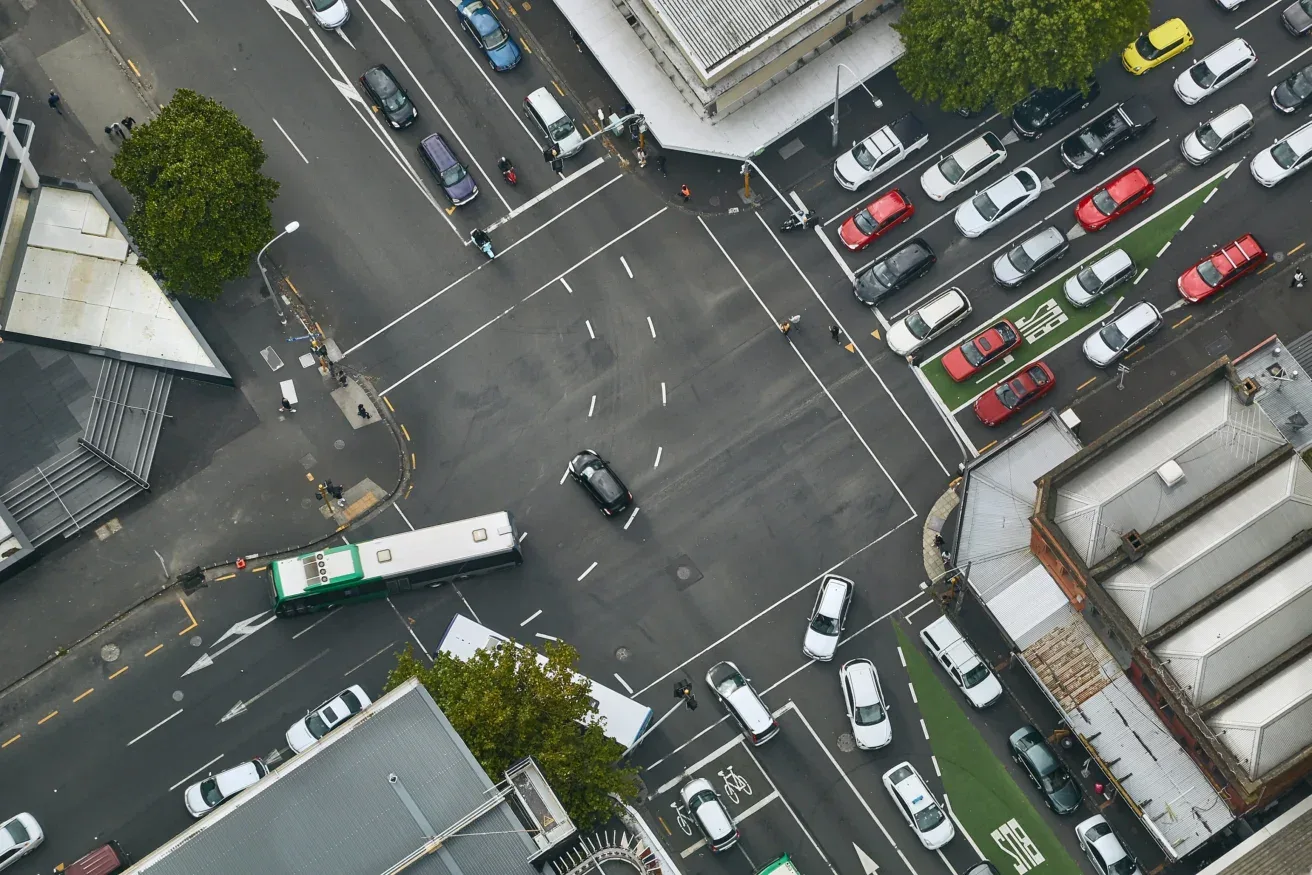
Intersection accidents are really common, contributing to about 50% of all traffic injuries and nearly 25% of traffic fatalities each year, according to the Federal Highway Administration. These collisions often occur in high-risk areas such as urban streets due to higher traffic volume. When a crash happens in the middle of an intersection, determining fault is rarely straightforward. Intersection crashes involve traffic signals, right-of-way rules, timing, and potentially multiple vehicles. Discover the most common causes of intersection crashes and how insurance companies and car accident attorneys determine who is at-fault.
What Are the Leading Causes of Intersection Accidents?
Intersections are naturally congested areas. Cars, trucks, bicycles, motorcycles, and pedestrians all share the road moving at high speeds in all different directions. When a driver, cyclist, or pedestrian makes a mistake, an accident can happen suddenly. Here are the most common causes of intersection accidents.
Running Red Lights & Stop Signs
Drivers often treat yellow lights as a signal to speed up rather than a warning to slow down. Rushing to beat a red light is a leading cause of severe intersection collisions, especially T-bone crashes.
Stop signs can be treated just as yellow lights are; not to stop, but to do a “rolling stop,” where a vehicle or cyclist slows down but never comes to a complete stop. Some people come to a complete stop, but go before it is actually their turn. When drivers ignore these traffic signs, it puts everyone in the intersection at serious risk.
Failure to Yield the Right-of-Way
Right-of-way rules dictate who gets to go first when multiple vehicles reach an intersection. Left turns are notoriously dangerous for this exact reason. A driver attempting to turn left must yield to oncoming traffic. If they misjudge the speed of an approaching car or fail to see a motorcycle or cyclist, the accident can be really serious. Confusion at four-way stops also causes failure-to-yield accidents. When two cars come to the stop at the same time, the vehicle on the right has the right-of-way.
Distracted Driving
Taking your eyes off the road for even a second doubles your risk of getting into a crash. You need to keep your attention on the road at all times and watch traffic lights, check for pedestrians in crosswalks, and the proximity of surrounding cars to your vehicle. Distracted drivers fail to react in time, leading to preventable collisions.
For a free legal consultation, call 844-721-1656
How is Fault Determined in a Car Accident
Insurance companies and car accident attorneys both rely on a variety of evidence to investigate the crash and determine fault.
- Traffic Laws & Right-of-Way Rules⎯The main question is usually who had the legal right-of-way in the intersection at the time of the crash. If one driver clearly violated a traffic statute, they’ll likely carry the majority fault.
- Police Reports & Officer Observations⎯When an officer arrives at the scene, they’ll note where the vehicles are positioned, look for skid marks, and take road conditions into account. Be sure to not say anything that could implicate your fault in the accident. Stick to facts about what happened. This report is important evidence and carries a lot of weight during the fault determination process.
- Witness Statements⎯Drivers, cyclists, and pedestrians involved in a crash often have conflicting stories which is why independent witnesses are incredibly important. These witnesses can provide an unbiased account of what happened.
- Video Footage⎯Many modern intersections have traffic cameras that capture collisions as they happen. Security cameras from nearby businesses also frequently catch intersection crashes on tape. Video footage leaves little room for argument when establishing fault.
Can Fault in an Auto Accident be Shared?
Fault isn’t always assigned to one party. In many intersection accidents, multiple drivers often share fault. Depending on which state you live in, insurance companies apply different rules for shared fault.
If you live in Illinois, this state follows a modified comparative fault system which means each party involved in an accident is assigned a percentage of fault. If you’re found to be 50% or less at-fault, you can still recover damages, although your compensation will be reduced by your share of fault. If you’re more than 50% at-fault, you may be barred from receiving any compensation. Learn more about Illinois car accident laws in this post.
If you live in Ohio, this state follows a modified comparative fault system as outlined in Ohio’s Revised Code § 2315.33 and related sections. Under this system, each party involved in an accident is assigned a percentage of fault. If you are found to be 50% or less at fault, you can still recover damages, though your total compensation will be reduced by your share of fault. If your fault is 51% or more, you’re barred from receiving any compensation. Learn more about Ohio car accident laws in this post.
If you live in Minnesota, this state follows a unique no-fault insurance system. Your ability to recover compensation typically depends on three key factors
- Liability—Who is at fault and how no-fault rules affect the claim
- Insurance Coverage—Which policies apply including personal injury protection (PIP) and uninsured and underinsured motorist (UM/UIM) coverage
- Damages—The extent of your medical bills, lost wages, and pain and suffering
Click to contact our personal injury lawyers today
Should I Hire an Attorney After a Car Accident?
Hiring an experienced car accident attorney at Postman Law after a crash is important to protect your rights, gather evidence right away, communicate with insurance companies, and secure the compensation you deserve. Intersection car accidents often involve complex liability issues and disputed fault. Call us at 844-POSTMAN or contact by filling out our online form to set up a no-obligation consultation. Postman Law works on a contingency basis, so we only get paid if you win. We’ll review the details of your case, explain your legal options, and stand by your side to help ensure you get the compensation you’re entitled to—even if fault is shared.
We have offices in Chicago, Cincinnati, Denver, and Minneapolis, but also handle car accident cases nationwide, and have secured thousands in compensation for clients. Let us fight for you!
Disclaimer: This blog post is for informational purposes only and does not constitute legal advice. For specific guidance regarding your situation, consult a licensed attorney.
Call or text 844-721-1656 or complete a Free Case Evaluation form